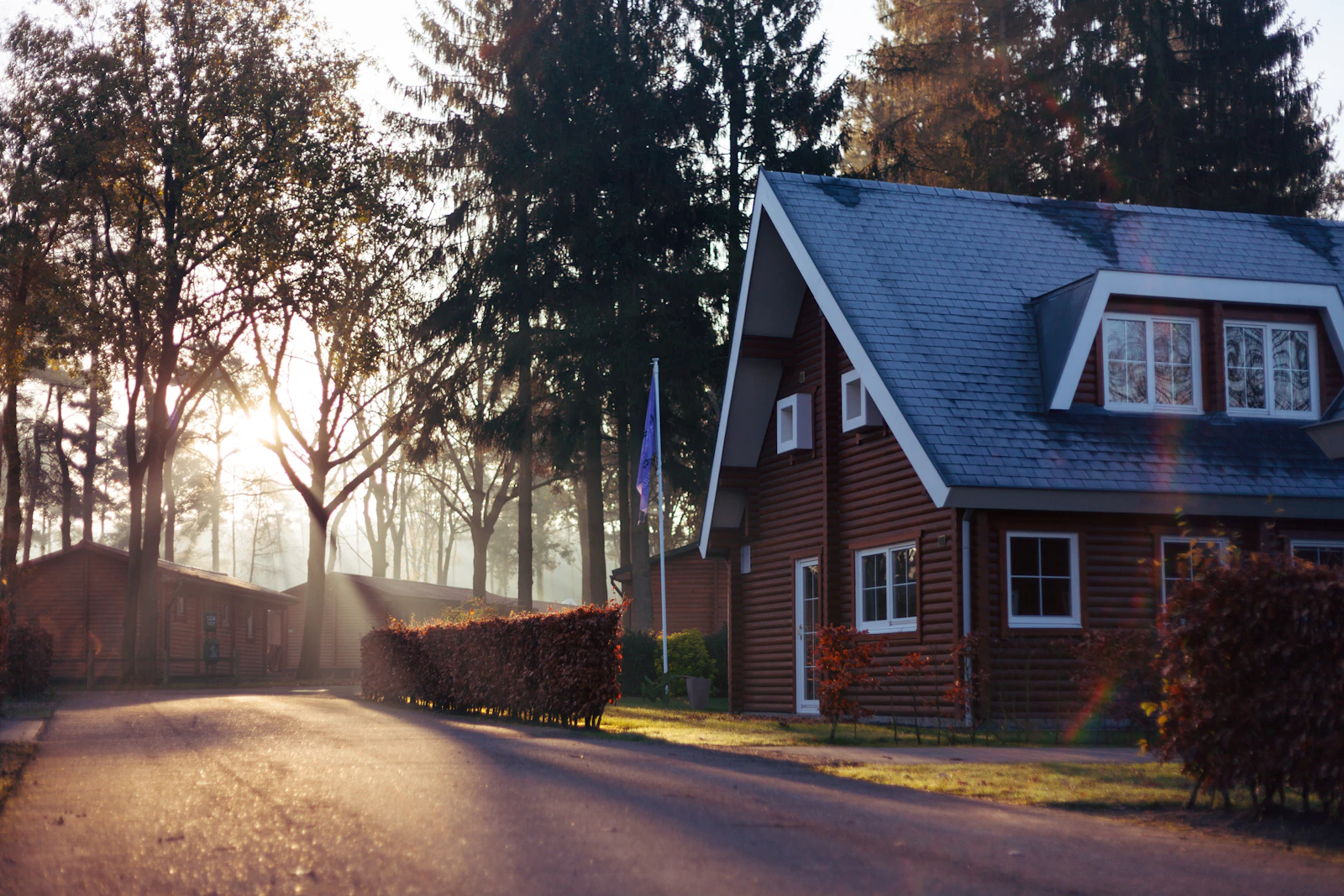
Choosing a house in Wylie means choosing between two versions of the town, and the sooner you understand that the faster the search gets. Most of the housing built here in the last twenty years is master-planned, HOA-governed, and organized around an amenity center. A smaller, older core near historic downtown is none of those things. Which one fits depends on what you want your Saturdays and your monthly dues to look like, and the answer is different for almost everyone.
Here is how the map actually breaks down, followed by the two things every relocating family underestimates: the commute and the utility patchwork.
The master-planned communities
If you want a pool, a gym, trails, and a calendar of neighborhood events built into your dues, this is the side of Wylie you are shopping.
Inspiration is the marquee example, a roughly 700-acre Huffines community out toward Lavon Lake. Its amenity package is genuinely resort-scale — Club Inspiration is a two-story fitness center and event space with lake views, and the community adds resort-style pools, a lazy river, dog parks, pickleball, and stocked catch-and-release ponds. It has been named a Community of the Year in the regional McSAM awards, and it shows. One thing to get straight before you fall for it: Inspiration technically sits within the small town of St. Paul, not the city of Wylie, even though it carries a Wylie mailing address and is zoned to Wylie ISD. It is marketed as Wylie and lives like Wylie, but the municipal line is real, and it is worth knowing which city hall your address actually answers to.
Woodbridge is the golf community, a large master-planned development that straddles Wylie, Sachse, and Murphy and is built around the Woodbridge Golf Club. That course — a public 18-hole layout on Country Club Drive that opened in 1999 — is the anchor, and the community threads extensive walking trails through the neighborhoods around it. If your idea of home is a round after work and a trail loop on the weekend, this is the one to walk first.
Bozman Farms sits off FM 544 toward Lake Ray Hubbard and has grown across nine phases, which means a range of home ages and price points under one HOA. Its amenities are spread out rather than concentrated: two community pools, Collins Park Lake with a lighted fountain and a fishing pier, and something like 70 acres of linear creekside parks stitched together with trails and playgrounds. It reads less like a single clubhouse and more like a network of green space you live inside of.
Dominion of Pleasant Valley is the newer, tighter option — a 292-acre community from Grand Homes and Coventry Homes near the SH-190 and SH-78 junction. It has an amenity center and pool and playgrounds, but its distinctive feature is the trail system, which connects to the adjacent Muddy Creek Preserve. Backing up to a nature preserve is a rare thing in a new-build community, and it gives the trails somewhere real to go.
The established neighborhoods
Not everyone wants a lazy river and a dues statement, and Wylie still has plenty of house for people who do not.
Nearest to that older sensibility are the blocks around historic downtown, where the housing predates the master-planned era and mostly comes without an HOA. This is where you find mature trees, deeper lots, and the ability to park a boat in your own driveway without a committee weighing in. The trade is older systems and older slabs, but for a lot of buyers the freedom and the walk-to-Ballard-Avenue location are the point.
Around those, a set of established neighborhoods fills in the middle of the market. Kreymer East is a newer residential pocket close to central Wylie — the same Kreymer name now attached to the district’s newest elementary, which tells you something about where the growth landed. Braddock Place is known locally as a mid-2000s subdivision with mature trees and larger lots, a step up in space from the tightest new-build streets. And names like Twin Lakes, Riverchase, and Emerald Vista show up regularly as established Wylie neighborhoods that longtime residents can place instantly. These are worth having your agent walk you through in person, because their character is in the streets rather than in a marketing brochure.
The commute reality: there is no freeway
This is the single fact that reshapes expectations for people moving in from closer to Dallas or Plano. Wylie does not have a freeway running through it. The town’s main spine is State Highway 78, also called Ballard Avenue, a widened six-lane arterial that runs southwest toward Garland and Dallas and northeast through the lakes. It moves a lot of traffic, but it is an arterial with lights, not an interstate.
To reach the region’s fast roads, you drive out to them. The President George Bush Turnpike, State Highway 190, is the closest — roughly four and a half miles away — and it is the go-to for anyone commuting toward the north Dallas job centers or the airport. US-75, Central Expressway, sits about ten miles off, reached either by SH-78 or by taking FM 544 west through Murphy and Plano. That FM 544 corridor is the workhorse route for the west-side commute, and it is worth driving at your actual commute time before you buy, because a road that is fine at ten in the morning can behave very differently at eight.
The practical upshot: figure your commute from the on-ramp of the tollway or Central, not from your driveway, and add the arterial miles to reach it. A house that looks close to Plano on a map still has to get you across town to FM 544 first. For a lot of Wylie buyers that trade — a slower drive out in exchange for more house and the lake fifteen minutes away — is exactly the deal they came for. Just go in with the drive timed rather than guessed.
The utility patchwork you inherit
Wylie is one of those Texas towns where your providers depend on your exact address, and the mix catches newcomers off guard.
Electricity is deregulated and delivered over the Oncor grid, which means you shop for a retail plan rather than being handed one — a normal Texas experience, but a surprise for anyone arriving from a regulated market. Parts of the surrounding area are served by Farmers Electric Cooperative instead, so confirm which delivery utility your address actually falls under before you sign up a retail plan. The city does not run a municipal electric utility, so there is no single “Wylie power” account to open.
Water is where the patchwork gets real. The wholesale supply comes from the North Texas Municipal Water District, drawing primarily from Lavon Lake and supplemented by Lake Texoma and Cooper Lake. But retail delivery — the utility that actually bills you — can be the City of Wylie’s water system, Wylie Northeast Special Utility District, or East Fork Special Utility District, depending on where in and around town you land. Two houses a few miles apart can have entirely different water bills and account processes, so this is a question to ask specifically about the address you are buying, not the town in general. Whichever provider you get, the underlying supply flows through NTMWD, which is why the district’s year-round conservation and watering rules apply no matter whose name is on the bill.
Natural gas is the simple one: Atmos Energy serves the area, and that is the account you open for gas heat and appliances.
Schools and the everyday stuff
Wylie ISD is the district for the town and for the Wylie-addressed communities beyond the city line, including Inspiration out in St. Paul. It is growing fast, splitting into two high schools — Wylie High School and Wylie East High School — with attendance zones that have shifted as new campuses have opened. If schools are driving your search, confirm the assigned campuses for the specific address rather than the neighborhood name, because the boundaries have moved with the growth.
For the ordinary rhythms of settling in, the Rita and Truett Smith Public Library at 300 Country Club Road is the civic hub a lot of new families discover first — storytimes, programs, and meeting space in one place, and a soft landing for kids in a new town. It sits along the same Country Club Road stretch as the municipal complex and its trail loop, which makes that corner a useful orientation point when you are still learning the map.
The one-question version
If you strip the search down to a single decision, it is this: amenity center or downtown character. Pick the master-planned side — Inspiration, Woodbridge, Bozman Farms, Dominion of Pleasant Valley — and you are buying into pools, trails, dues, and a built-in social calendar. Pick the older core and you are buying space, freedom, and a walk to Ballard Avenue, minus the clubhouse. Everything else — the commute out to the tollway, the water provider you happen to inherit, the school your street is zoned to — is detail you sort once you have answered that first question honestly.


