What Does It Take to Win a National Solar Car Championship Three Times in a Row?
For most high school athletic or academic programs, a single national title marks a generation. Winning back-to-back championships elevates a program to the conversation about dynasties. Winning three consecutive national championships — with an entirely new vehicle each time — places a program in a category that is genuinely difficult to explain without looking closely at the culture that produced it.
That is the situation at Wylie East High School, where the Solar Car Team captured its third straight Solar Car Challenge National Championship in the summer of 2026. The achievement was announced through Wylie ISD, the district that oversees the school, and it arrives at a moment when the district is making significant investments in the kind of career and technical education that programs like the solar car team represent.
What Makes This Championship Different From the Previous Two?
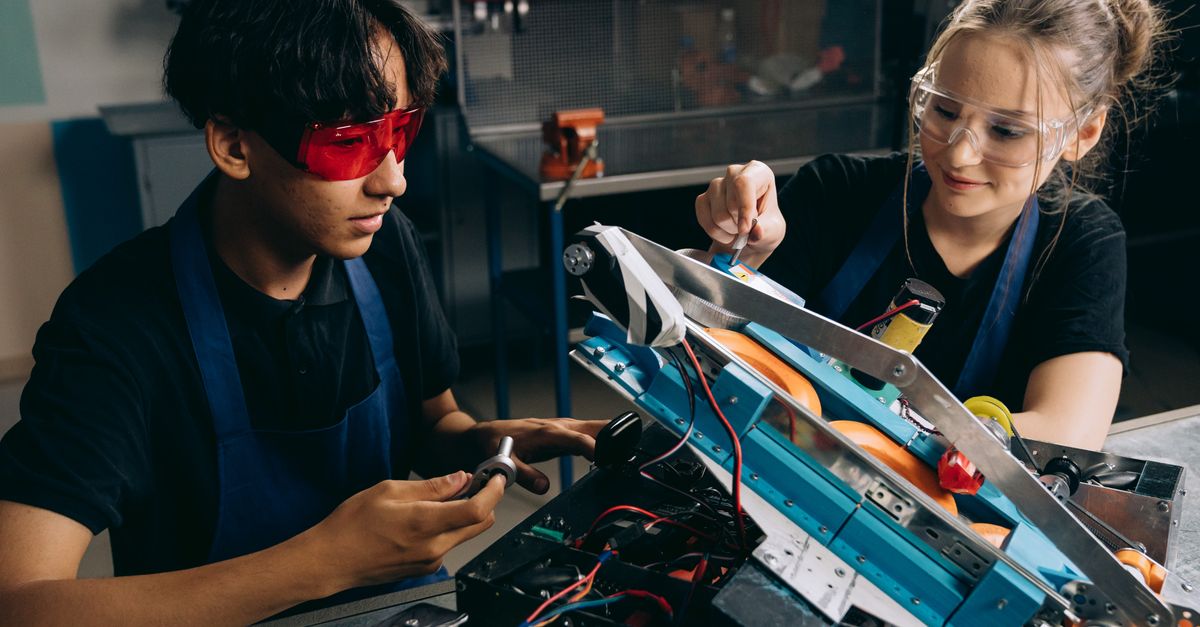
The detail that separates this title from the prior two is not the winning itself, though that alone would be remarkable. It is the fact that the team debuted a vehicle built entirely from the ground up by students.
In competitive solar car racing, teams can theoretically refine and optimize a proven chassis over multiple seasons, extracting incremental gains from a design that already works. That path is lower risk. The Wylie East team chose a different approach for 2026: they started over. Designing, engineering, and assembling a new car introduces variables that a returning design does not carry. Materials behave differently. Weight distributions change. Aerodynamic assumptions that looked correct in theory require real-world testing to validate.
The decision to build new rather than iterate suggests a program that is not simply trying to defend a title but is treating each competition cycle as an independent engineering problem. That orientation — toward process and learning rather than just preservation of a result — is worth noting, because it speaks to what the students are actually getting out of the program.
How Does Solar Car Racing Work as an Educational Experience?
The Solar Car Challenge is a national competition in which student teams design and build solar-powered vehicles and race them under a structured set of rules. The event tests engineering knowledge, project management, systems integration, and the ability to perform under competitive pressure.
For students at Wylie East, the program operates as a living laboratory for disciplines that connect directly to the workforce. Electrical systems, structural engineering, materials selection, aerodynamics, and race strategy all intersect in a single project with a deadline and a public result. There is no partial credit for almost finishing.
The skill set demanded by the program overlaps significantly with what Wylie ISD has been building toward at the district level. At the August 17, 2026 Board of Trustees meeting, the district announced that its newest educational facility — the Marvin Fuller Career and Technical Education Center, located at the F.O. Birmingham Agriculture Center — would carry the name of a longtime community leader. The CTE center is designed to expand career pathways and develop real-world skills across the district. The solar car team at Wylie East is, in many respects, a proof of concept for exactly what that kind of education can produce.
Why Does Consecutive Success Matter Beyond the Trophy?
One national championship could reflect a good year: favorable conditions, a strong senior class, perhaps some fortune in competition brackets. Two in a row begins to suggest something structural. Three consecutive titles, with a new vehicle design in the final year, implies that the program has developed systems — for recruiting students, for transferring institutional knowledge between graduating and incoming members, for managing a long-horizon engineering project — that are repeatable.
Repeatable success in student programs is harder to build than it appears. High school programs face annual turnover by design. Students who contributed to year one of a winning streak graduate and move on. The team that defends a championship is, by necessity, a partially different team from the one that won the first time. Maintaining competitive performance across that kind of roster transition requires documentation, mentorship structures, and a culture in which returning members take genuine ownership of passing down what they know.
The fact that Wylie East chose to introduce a brand-new vehicle in the championship year adds another layer. It suggests the team had sufficient confidence in its own processes — its ability to move from concept to competition-ready — to take on full design risk while also carrying the weight of a defending-champion target.
What Does This Signal About Wylie ISD’s Broader Trajectory?
The solar car championship does not exist in isolation. The 2026 Texas Education Agency A-F Accountability Ratings awarded Wylie ISD an overall ‘A’ with a score of 92 — the highest rating the state assigns. The district also opened its 22nd and 23rd campuses this August, O.W. Hampton Intermediate and Richard Parker Junior High, both located near Kreymer Lane just south of Brown Street. The new CTE center bearing Marvin Fuller’s name adds a dedicated facility for the career-focused learning that programs like the solar car team already embody.
Taken together, these developments describe a district that is expanding its physical footprint, maintaining academic quality at the highest state-rated level, and producing students who can compete and win on a national stage in fields that align with engineering, energy, and technology.
For a community like Wylie — which has grown substantially and continues to develop — the question of what kind of school district graduates students are entering adulthood through matters enormously. A team of high schoolers who designed, built, and raced a solar-powered vehicle to a third consecutive national championship offers one concrete answer to that question.
What Comes Next for the Program?
No details about the next competition cycle or vehicle design have been announced. What is known is that the program now carries the weight — and the credibility — of three straight national titles. For incoming students at Wylie East who might consider joining, that record represents both an attraction and a standard.
For the broader Wylie community, the achievement is a reminder that some of the most significant things happening in town on any given week are occurring inside school buildings, in the hands of students who are building something with real stakes attached.